New Delhi/Washington, July 2:
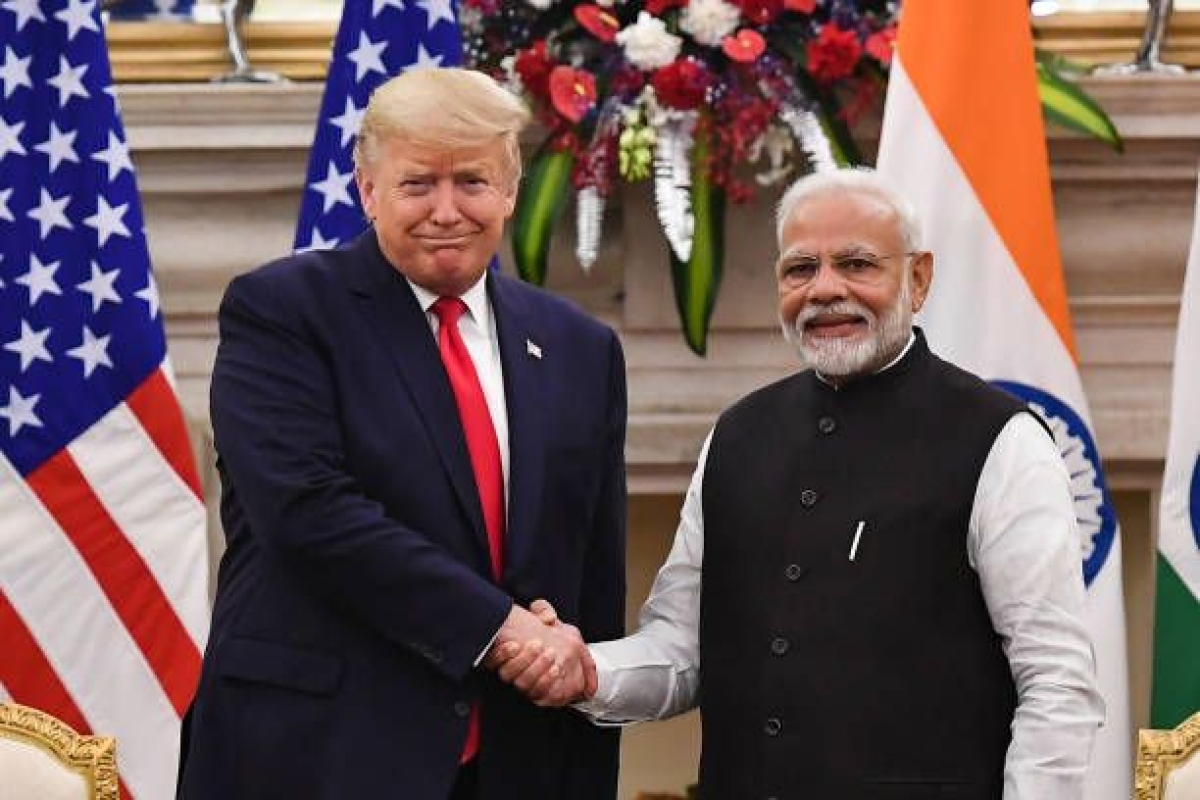
With just days to go before the July 9 deadline set by the White House, the much-anticipated interim trade agreement between India and the United States appears to be teetering on the edge of collapse, caught in a web of hardline negotiations over agriculture, tariffs, and market access.
Despite optimistic signals from both sides—White House Press Secretary Karoline Leavitt recently hinted that the deal was "imminent," and Indian Finance Minister Nirmala Sitharaman echoed Prime Minister Narendra Modi's sentiment by calling it a potential “big, good, beautiful” deal—key disagreements remain unresolved.
According to Indian officials involved in the negotiations, the deadlock centers on agricultural access, import tariffs on steel, and the U.S.’s demand for opening India’s auto parts market. With time running out, Indian negotiators have extended their stay in Washington for another round of talks.
“The next seven days could determine whether India and the US settle for a limited ‘mini-deal’ or walk away from the negotiating table—at least for now,” says Ajay Srivastava, a former Indian trade official and founder of Global Trade Research Initiative (GTRI).
Agriculture remains the most sensitive issue. The U.S. has long pushed for greater access to India’s farm market—viewed as a high-potential yet heavily protected sector. But for India, safeguarding the livelihoods of over 700 million rural citizens is politically and economically non-negotiable.
“India will need to protect its basic agriculture sector for both economic and political reasons,” explains Richard Rossow of the Center for Strategic and International Studies (CSIS) in Washington.
He adds that India’s growing use of Quality Control Orders (QCOs)—which now exceed 700 under the “Atmanirbhar Bharat” (self-reliant India) initiative—has raised concerns in Washington. These import-quality regulations are seen by U.S. officials as non-tariff barriers that increase costs for exporters and domestic industries alike.
Among U.S. priorities are exports of maize, soybeans, cotton, and corn to India. However, experts warn that any tariff reductions could threaten India's Minimum Support Price (MSP) policy and public procurement systems, which stabilize farmer incomes and food security.
Despite a NITI Aayog paper recommending tariff cuts on several U.S. agri-exports—including dairy, poultry, apples, almonds, and genetically modified soy—there is no clarity on whether this reflects official policy.
“If the US says ‘no deal’ without full agri-access, then American expectations were set too high,” notes Rossow. “Any democratic government has political limits on commercial concessions.”
Most experts now believe that a limited trade agreement is the most plausible outcome. Styled after the US-UK mini-deal announced on May 8, this pact may include:
Tariff reductions on industrial goods such as automobiles
Limited agricultural access via quotas or reduced duties on select U.S. products like ethanol, almonds, apples, walnuts, wine, and spirits
Big-ticket commercial buys from India, such as LNG, oil, Boeing aircraft, helicopters, and nuclear tech
Investment concessions in retail and remanufactured goods, benefiting U.S. giants like Amazon and Walmart
“This mini-deal would focus on strategic commitments and leave more complex issues—like digital trade, services, and intellectual property—for future negotiations,” says Srivastava.
While no formal threats have been issued, experts suggest that if talks collapse, Trump may not reinstate the previously steep 26% retaliatory tariffs. A 10% tariff may instead apply across Indian goods, layered on top of standard WTO (Most Favoured Nation) rates. However, doing so could invite criticism of bias, especially since only the UK has managed to seal a deal so far.
“Still, with Trump, surprises can't be ruled out,” Srivastava cautions.
As the July 9 deadline approaches, the fate of what was once heralded as a transformative “big, beautiful” trade pact hangs in the balance—caught between political pragmatism, economic sensitivities, and high diplomatic stakes.